Compute Block
Compute, fabric and cooling in one block.
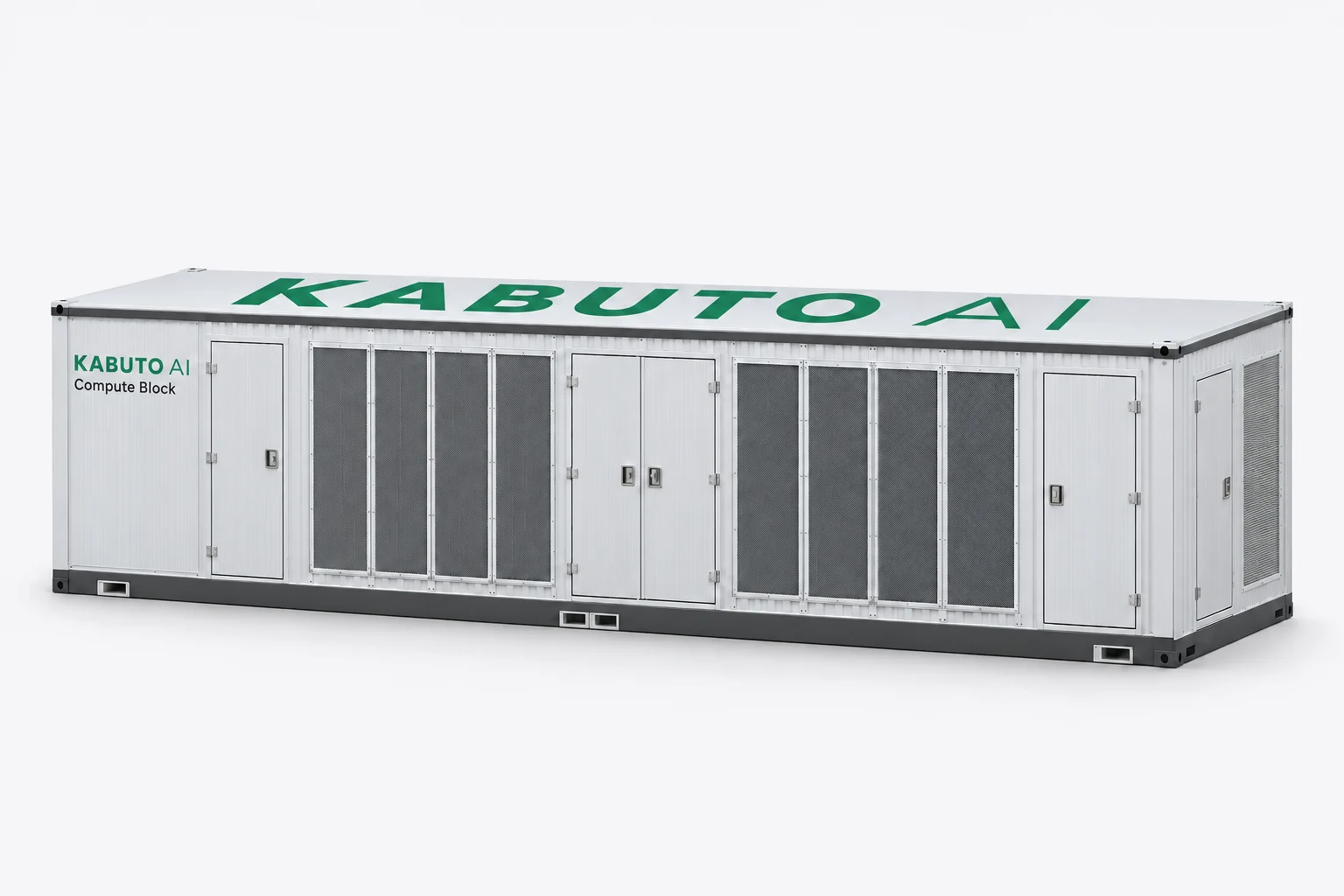
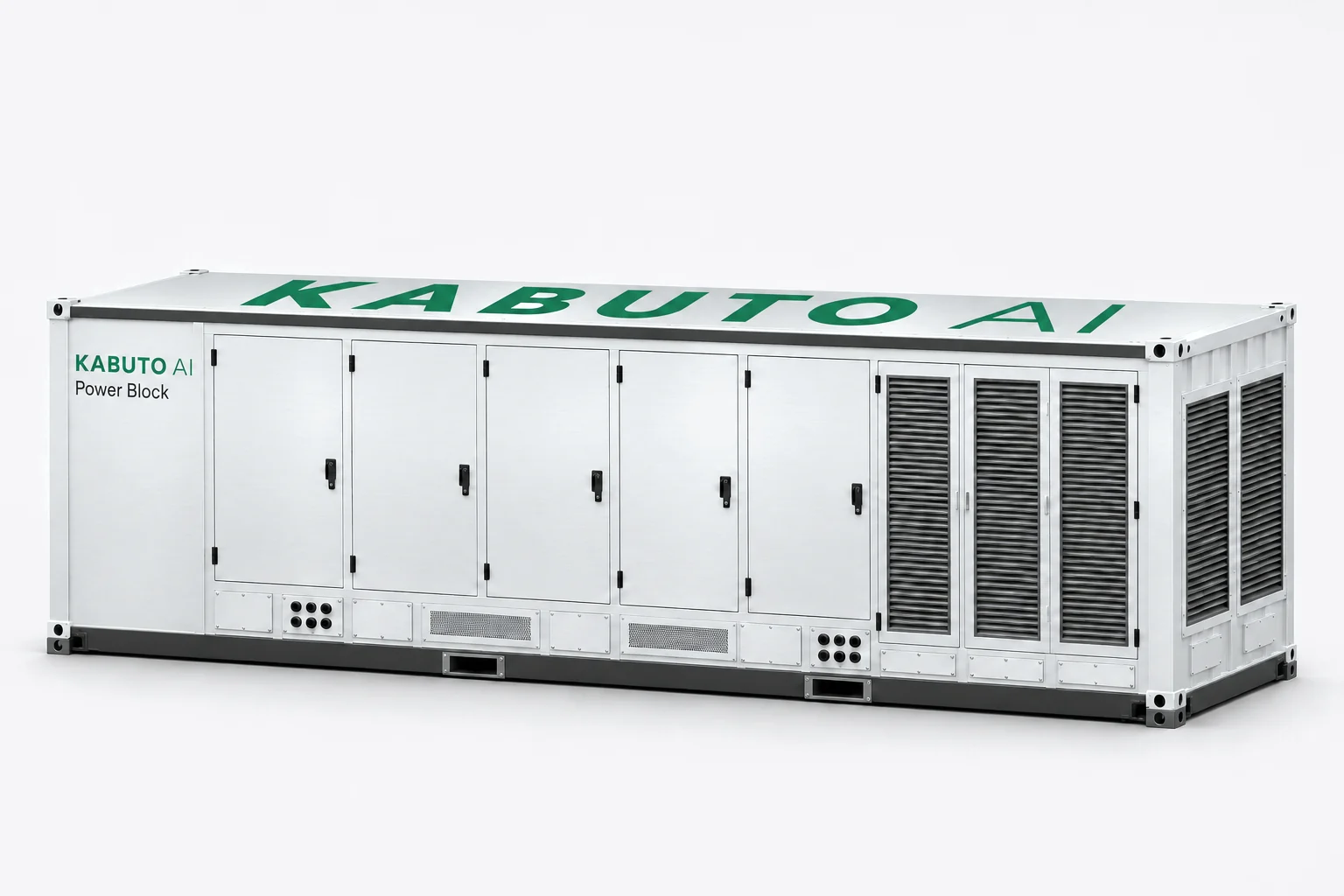
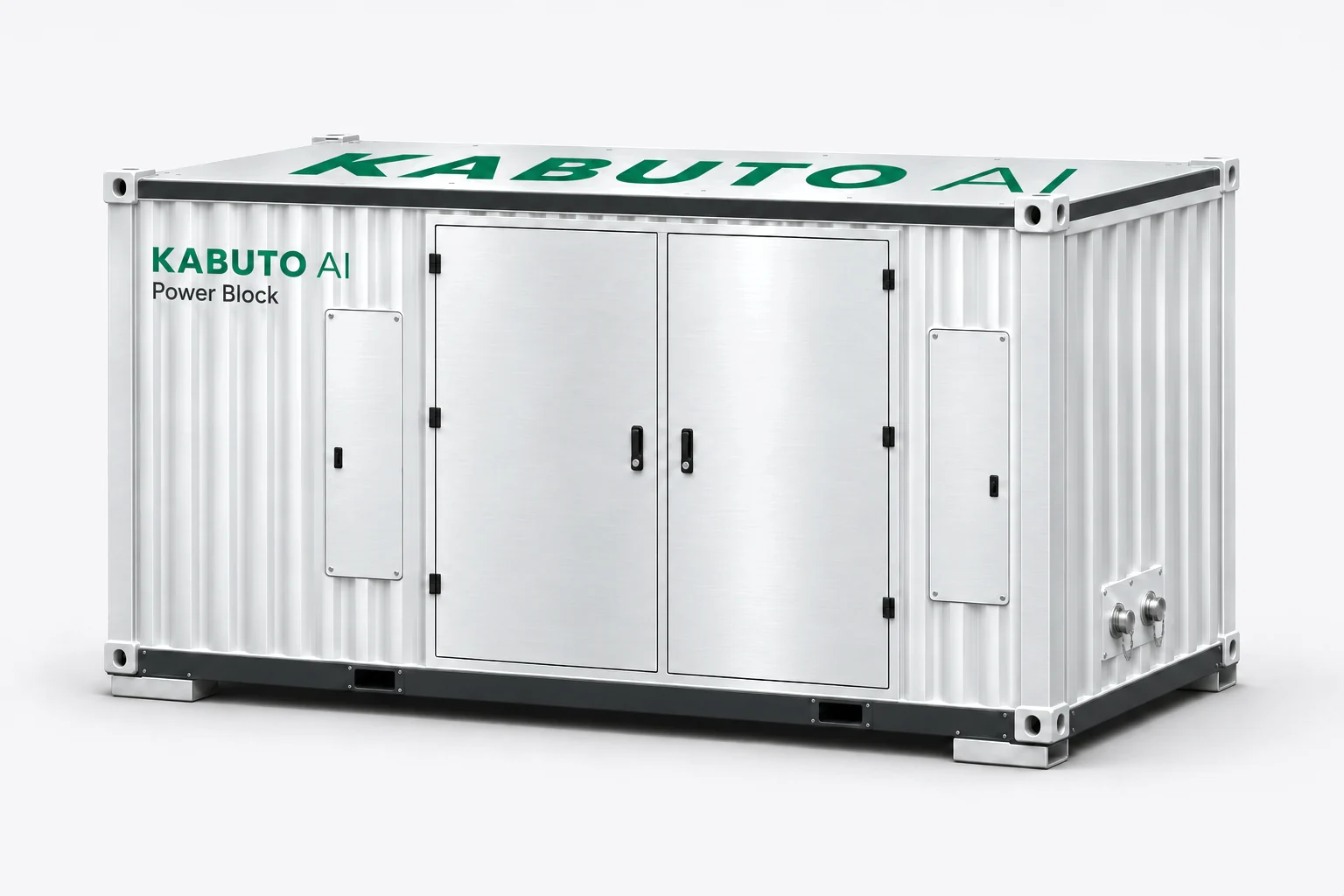
Product renders, not photographs; appearance and configuration follow each project's delivery.
At a glance
Compute
Racks, networking, liquid cooling and electrical interfaces are organized in a 40 ft reference form. Rack count, per-rack power, total IT load, CDU configuration, supply and return temperatures and network bandwidth are fixed per configuration version.
Direction 1: NVIDIA DSX and 800 V HVDC
NVIDIA DSX is a reference architecture and platform for designing, simulating, building and operating AI factories — not a GPU model. We design to its public architecture and the 800 VDC direction, reserving power, cooling and networking for Vera Rubin-class interface requirements. The 800 VDC boundary of a DSX POD and the input of a specific DGX rack are different layers; the rack interface is confirmed for the rack version selected.
Direction 2: multi-vendor platforms
For each accelerator we confirm hardware selection, operating system, drivers, frameworks, compilation and workload migration separately. Ascend is an NPU and Cambricon an MLU; Google TPU is a separate, mainly cloud-delivered accelerator ecosystem and is not treated as a generally purchasable GPU. Other GPUs are listed from actual documentation. Compatibility research is not interoperability certification.
Tech specs
Multi-vendor · pairs with Power Block 1.0
NVIDIA DSX · pairs with Power Block 2.0
Compute Block 1.0
Compute Block 2.0
Scheme-stage design values; rack and GPU configuration follow the customer's selection and the maker's latest documents.
Network
Scope covers the compute and management networks, fiber cabling, switching, monitoring and network redundancy. Switch models, port counts and speeds, and the choice of InfiniBand or Ethernet follow the requirements and hardware selection.
Thermal
Rack cold plates, CDUs, secondary loops, heat exchange and rooftop dry coolers are designed as one heat path. Rooftop equipment is placed for heat rejection, not moved for branding. Published supply temperatures are not ambient temperatures; whether chillers are needed is calculated for local climate and configuration.
Electrical interface
The block draws from the Power Block DC bus, with the rack interface configured to the rack's input. The public DGX Vera Rubin NVL72 hardware guide, for example, describes 415–480 VAC input converted to 54 VDC in the rack, so not every Vera Rubin rack accepts 800 VDC natively. We re-check against the latest official documents.
Software stack
Covers facility monitoring, energy and thermal data, and integration with compute resource management. The AIDC design software is being prepared; its entry point will be announced when available.
Public technical references
These public documents explain the design direction; they do not indicate KABUTO certification, supply status or completed compatibility testing.